Coupon Barrier vs. Maturity Barrier: What Each One Decides
Where each level sits, when each one is tested, and what an advisor should compare across two contracts.
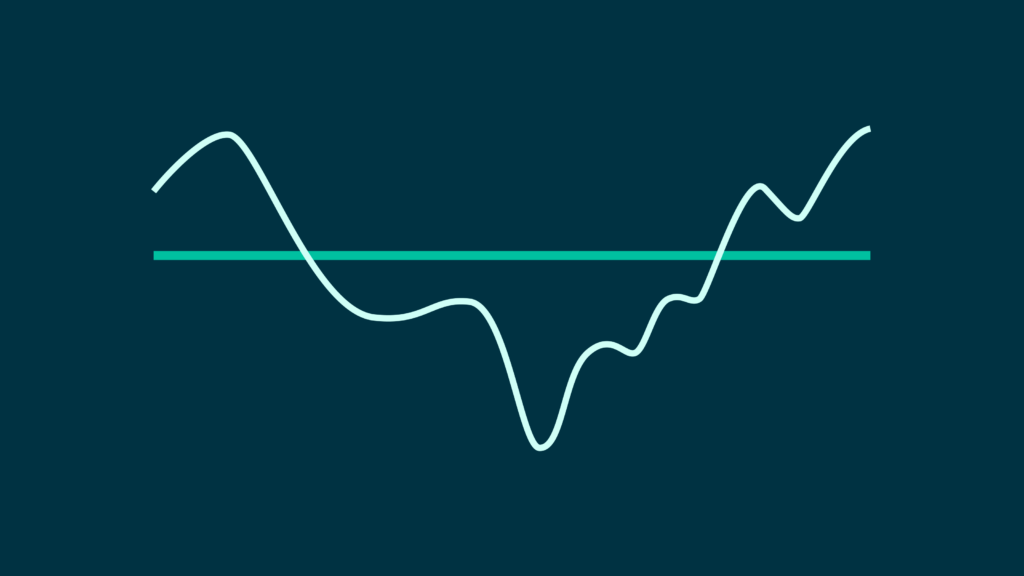
The first piece in this series introduced the five parts of an autocallable contract. Two of them decide most of what an advisor needs to evaluate. The coupon barrier governs whether a coupon is paid on a scheduled observation date, and the maturity barrier governs whether principal is repaid in full at the end of the contract, if it has not already been called. They sit behind most of the coverage this category attracts; the high yields and the cautionary notes alike, usually without being named.
Both are set before your client invests, and both are measured against the same underlying exposure. What separates them is timing. The coupon barrier is tested on scheduled observation dates throughout the contract, while the maturity barrier is generally tested only on the final observation date.
The coupon barrier: when income is paid
The coupon barrier determines whether scheduled income is paid. On each observation date, typically monthly or quarterly, the contract compares the underlying exposure against the barrier. If the exposure is at or above it, that period’s coupon may be paid. If it is below, that coupon may be skipped. The contract is evaluated again on the next observation date, so a skipped coupon does not end the contract, and future coupons may still be paid. These are the mechanics behind what we call Conditional Income.
Example: a coupon barrier set 40% below the starting level. If the exposure started at $100, the barrier sits at $60. Your client may receive that period’s coupon as long as the exposure closes at or above $60 on the observation date. Below $60 on the observation date, the coupon for that period may be skipped.
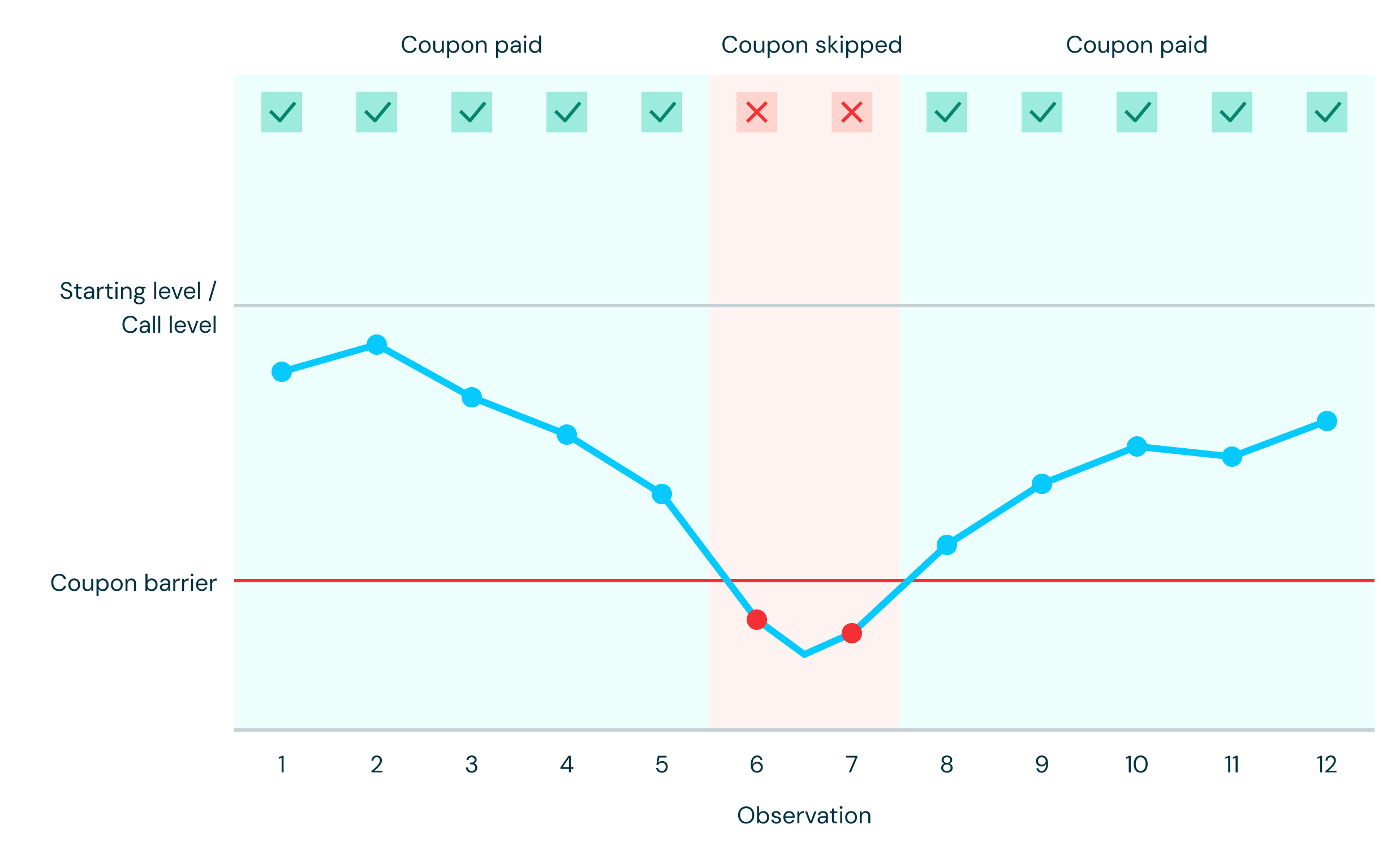
A temporary move below the barrier between observation dates does not affect whether a coupon is paid, since the test runs only on the scheduled dates.
The maturity barrier: whether principal is repaid in full
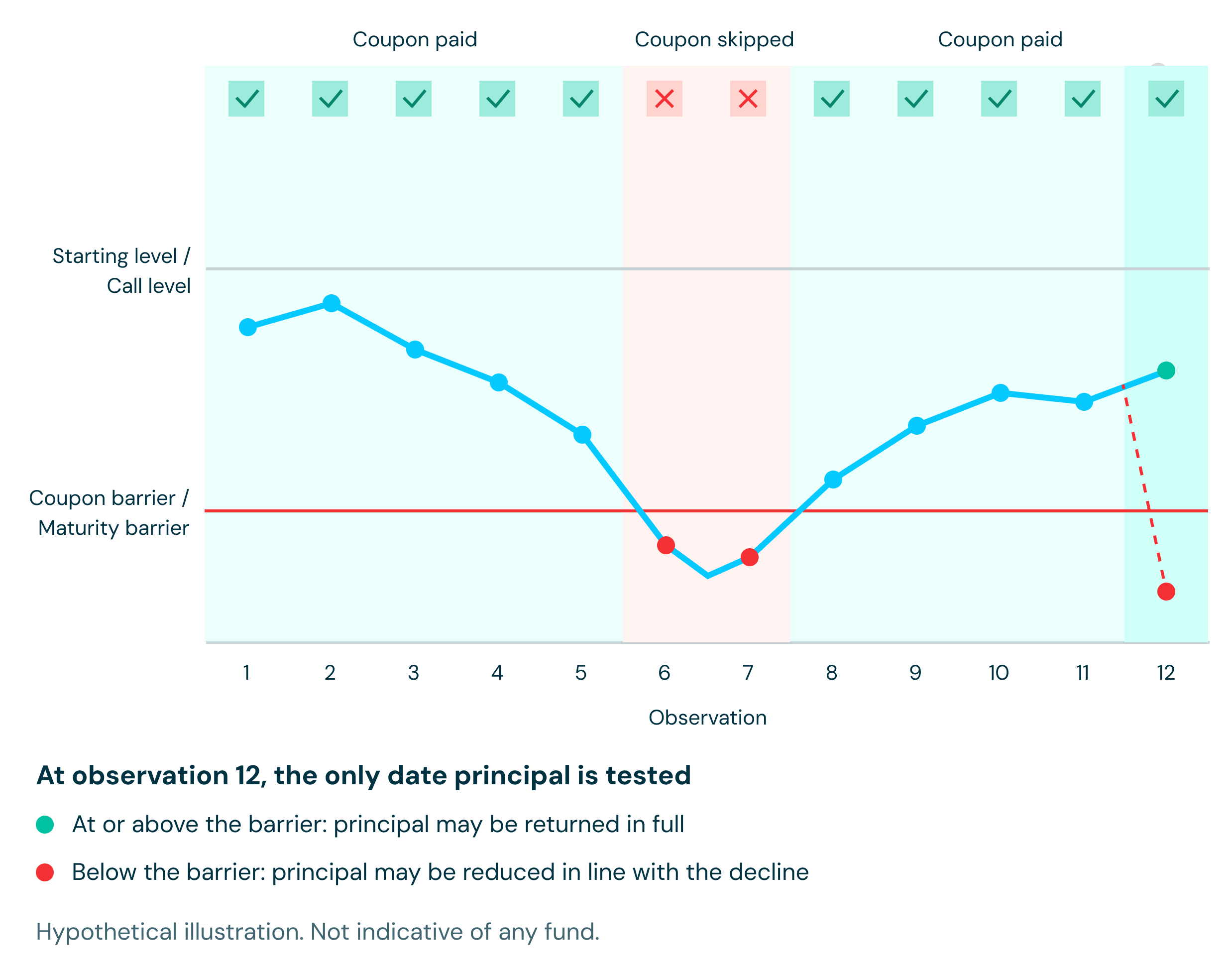
The maturity barrier is tested once, at the end of the contract’s term, and it determines whether principal is repaid in full or reduced in line with the reference asset decline.
A European maturity barrier is observed only on the final valuation date, so the path the exposure took to get there carries no weight in the outcome. An exposure can trade well below the barrier for months and still return principal in full, provided it finishes at or above the barrier on the final valuation date. Not every autocallable is structured this way, which makes observation style important to confirm when initially comparing two contracts.
Example: a maturity barrier set 40% below the starting level. Using the same $100 exposure, the barrier sits at $60. If the exposure finishes at or above $60 on the final valuation date, principal may be returned in full. If it finishes at $55, a decline of 45%, principal may be reduced by 45%.
Principal repayment at maturity also depends on the counterparty to the contract meeting its obligations, which is a separate question from where the exposure finishes relative to the barrier.
Why the difference matters
The two barriers can sit at the same level, and in most contracts they do. The coupon barrier is tested at every observation, which is what allows income to be interrupted and resumed over the life of the contract. The maturity barrier is tested once, which is why a contract can miss several coupons along the way and still return principal in full.
Barrier depth is among the most useful comparisons an advisor can make between two contracts. A deeper barrier gives the exposure more room to decline before either condition is missed. A shallower barrier may support a higher coupon, and it may also raise the likelihood that a coupon is missed or that principal is reduced. Read together, the two barriers describe the tradeoff a contract is making.
When the barrier applies to more than one exposure
Some contracts reference a basket rather than a single index. In a worst-of contract, both barriers are measured against the weakest performer in the basket on each observation date. A basket can be higher on average and still miss a coupon if one member has fallen below the barrier.
That is why a worst-of contract can quote a higher coupon than a single-index contract with the same barrier level. More has to go right for the conditions to be met. When two coupons look far apart, the number of reference assets is among the first things to check.
What this means at the fund level
An autocallable ETF holds a portfolio of individual contracts, each with barriers set against its own starting level on its own start date. The fund therefore has no single barrier and no single maturity date, and comparing two funds means comparing how barriers are set across the whole portfolio rather than reading one number. Those start dates are staggered by design. Spreading contracts across entry points, observation dates, and maturities is what a laddered portfolio does, and it is work you would otherwise take on one note at a time.
We cover laddering on its own later in this series.
Disclosures:
All investments involve risk, and the past performance of a security or financial product does not guarantee future results or returns. There is always the potential of losing money when you invest in securities or investment strategies. Investors should consider their investment objectives and risks carefully before investing. Options have specific investor risks. The opinions and forecasts expressed may not actually come to pass and should not be construed as a recommendation of any specific security or strategy. All content has been provided for informational or educational purposes only. Target Outcome Investments® and Target Buffer® Strategies® are registered trademarks of Vest Financial™. Investment advisory services are provided by Vest Financial LLC, an SEC-registered investment adviser. Financial professionals are responsible for evaluating investment risks independently and exercising independent judgment to determine whether investments are appropriate for their clients.