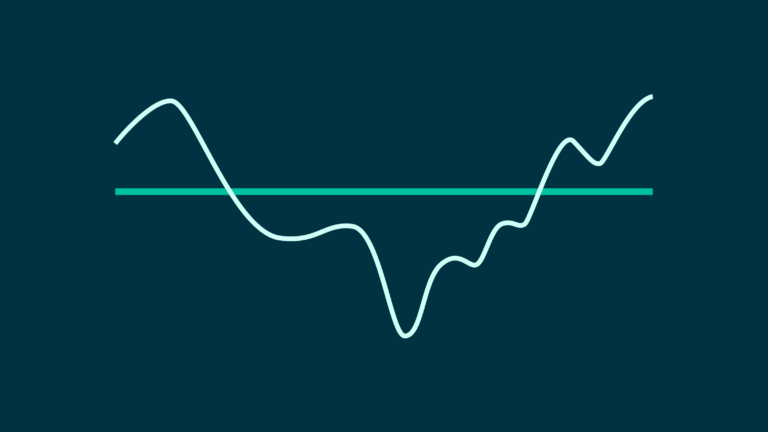
How to Read an Autocallable ETF
The five parts of an autocallable contract, and the two tests that decide the outcome.

An autocallable ETF holds contracts linked to one or more market exposures, most often equity indexes. Each contract seeks to pay income on a schedule, as long as its exposure is at or above a stated level on scheduled observation dates. A second level, commonly where the exposure started, decides whether the contract ends early and returns principal to the fund along with the income earned. If the contract runs to maturity and the exposure finishes below the lower level, principal may be reduced.
That is a different arrangement from a bond. A bond generally pays its coupon because the issuer is obligated to pay it. Here, income depends on a market condition being met on a scheduled date, and that condition is written into the terms before the contract begins.
We call this Conditional Income: income paid when stated conditions are met, with the conditions defined at the outset. The five parts below describe a single contract. the fund, which holds many of them. When one ends, the fund replaces it.
The five parts of an autocallable contract
Every autocallable contract is built from five parts. Once you know all five, you can evaluate any of these strategies on the same terms: what has to happen for income to be paid, and what has to happen for principal to be at risk.
Underlying exposure: the reference asset the contract terms are written on, which may be an index, a basket of indexes, or a single security. The market risk in the contract comes from this exposure.
Observation dates: the scheduled dates when the exposure is measured against the stated levels.
Coupon barrier: the level the exposure generally must be at or above on an observation date for that period’s coupon to be paid.
Call level: the level that, if reached on an observation date, can end the contract early and return principal along with the income earned. It is commonly set where the exposure started, so a contract can end early without a gain.
Maturity barrier: the level that determines how principal is treated if the contract reaches maturity without being called.
Together these five set the risk and return. The potential coupon is only as valuable as the conditions sitting behind it.
Some autocallables add features on top of these five parts. One is a memory feature, which can allow a missed coupon to be paid later if a subsequent observation clears the barrier. Check which features are present before comparing two coupons.
How the call works
The name comes from the automatic call written into the terms. On an eligible observation date, if the underlying exposure is at or above the call level, the contract may redeem early. When it does, the contract returns the income due for that period along with principal to the fund, subject to the terms of the contract.
A call does not require a gain, so the stated maturity may overstate how long an individual contract remains outstanding.The reinvestment risk may be familiar to advisors who use callable bonds, but the driver is different. In a callable bond, the call is often linked to interest rate movements and expected credit risk. In an autocallable, the call is generally linked to the performance of the underlying exposure relative to the call level. That makes the expected holding period an important part of the evaluation from the start.
The call feature also influences the coupon. Economically, it functions like an embedded call option within the contract. The contract’s income potential is supported in part by accepting that upside participation may be limited if the call condition is met. The stated coupon should therefore be evaluated alongside the call level, the observation schedule, the barrier levels, and the likelihood that the contract is called before maturity.
When a contract is called, that contract ends while the fund continues. An autocallable ETF has no maturity date, so proceeds from a called contract are generally reinvested into a new contract written at prevailing terms. Your client holds the portfolio rather than any single set of terms.
Income and principal outcomes
There are two payoffs to evaluate separately: whether income is paid, and how principal is treated. Each is decided by its own test, and the two are easy to run together.
The income test runs on each observation date. If the underlying exposure is at or above the coupon barrier, that period’s coupon may be paid. If it is below, that coupon may be skipped, subject to the contract’s terms.
The principal test runs once, at maturity, and only if the contract has not already been called. If the exposure is at or above the maturity barrier, principal may be returned in full. If it finishes below, principal may be reduced in line with the exposure’s decline. Because the income test runs at every observation and the principal test runs only at maturity, a contract can pay income in a period and still put principal at risk at the end.
The strategy can seek to pay income across flat, moderately rising, and moderately declining markets. The limit is a deep drawdown, where a severe decline can cost both the income and the principal.
Why the structure matters
Two autocallable ETFs can quote similar coupons and carry very different risks, depending on the underlying exposure, the barrier levels, the tenor, the observation frequency, and the call terms.
A single stock exposure may behave differently from a broad equity index, and barrier depth changes the odds that a condition is missed in either case. A worst-of contract may offer a higher coupon, but its outcome is determined by the weakest performer in the basket. A longer gap between observations changes how often the income test runs.
The takeaway
Reading an autocallable well begins with the structure, because the stated terms govern the income and the treatment of principal, and the coupon on its own tells you neither.
Key questions include:
- What is the underlying exposure, and is it a single security, an index, or a worst-of basket?
- Where is the coupon barrier, and how often is the income test run?
- Where is the call level, and what happens to capital if the contract is called early?
- Where is the maturity barrier, and how is principal treated below it?
- What does the fund hold, and how many contracts are in it?
Used with that evaluation, an autocallable strategy can seek to add a differentiated source of Conditional Income to a portfolio, drawn from a defined equity-linked exposure rather than from duration or credit.
Disclosures:
All investments involve risk, and the past performance of a security or financial product does not guarantee future results or returns. There is always the potential of losing money when you invest in securities or investment strategies. Investors should consider their investment objectives and risks carefully before investing. Options have specific investor risks. The opinions and forecasts expressed may not actually come to pass and should not be construed as a recommendation of any specific security or strategy. All content has been provided for informational or educational purposes only. Target Outcome Investments® and Target Buffer® Strategies® are registered trademarks of Vest Financial™. Investment advisory services are provided by Vest Financial LLC, an SEC-registered investment adviser. Financial professionals are responsible for evaluating investment risks independently and exercising independent judgment to determine whether investments are appropriate for their clients.