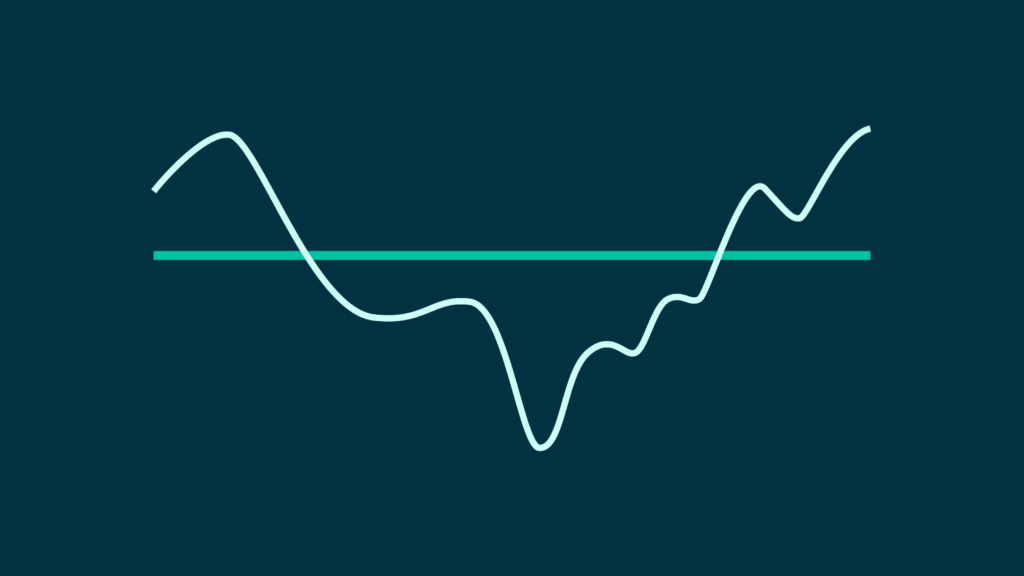
The Autocallable Strategy
- Income drawn from a defined equity-linked exposure, in an exchange-traded structure
- The coupon barrier, the call level, the maturity barrier, and the observation schedule, known on day one
- Daily liquidity, lower minimums, and terms visible
Why Vest?
In 176 days, the assets we manage in the category surpassed $2 billion.1 Vest engineered the strategy behind the first autocallable ETF registration filed with the SEC, in April 2025.2 We have engineered strategies like it for more than a decade as the creators of Target Outcome Investments®.
1Vest Financial internal daily net assets. Suite surpassed $2 billion on August 19, 2026, 176 days after launch on February 24, 2026.
2U.S. Securities and Exchange Commission, First Trust Exchange-Traded Fund Form 485APOS Post-Effective Amendment [Rule 485(a)], Filed April 4, 2025. SEC Accession No. 0001445546-25-002464.
Why Invest in the Autocallable Strategy?
Where the Income Comes From
Inside a bond portfolio, reaching for income has generally meant one of two levers: duration or credit. The Autocallable Strategy pulls a third. It sources income from a defined equity-linked exposure, on terms set before the market moves, and seeks to collect the premium markets pay for bearing that risk.
Terms You Know on Day One
The coupon barrier, the call level, the maturity barrier, the observation dates, and the income the strategy seeks to pay: every term is visible before the first dollar goes in. The structure is rules-based by design. Contracts are spread across entry points, observation dates, and maturities, which is the work of a laddered portfolio; work an advisor would otherwise take on one note at a time.
The same condition governs both. Below the coupon barrier on an observation date, that period's income may be skipped. If a contract reaches maturity without being called and the exposure finishes below the maturity barrier, principal may be reduced in line with the decline. A higher income reflects greater risk exposure, not more generous pricing.
You Watched This Happen with Buffers
The Autocallable Strategy has been on client statements for decades, in structured note form, through private bank and wirehouse channels. The exchange listing is what's new.
Buffer strategies made the same move. In 2026, buffer ETF assets surpassed buffered note outstandings for the first time: $84.5 billion versus $79.0 billion.3
Autocalls are not buffers, but the adoption pattern is similar, and buffers already proved the route.
3S&P Global Market Intelligence, "How Buffer and Autocallable ETFs Are Reshaping the Structured Note Market", July 2, 2026.
How It Works




The System Within the Strategy
| Underlying Exposure | The reference asset the contract terms are written on, which may be an index, a basket of indexes, or a single security. The market risk in the contract comes from this exposure. |
| Observation Dates | The scheduled dates when the exposure is measured against the stated levels. |
| Coupon Barrier | The level the exposure generally must be at or above on an observation date for that period's coupon to be paid. |
| Call Level | The level that, if reached on an observation date, can end the contract early and return principal to the fund along with the income earned. It is commonly set where the exposure started, so a contract can end early without a gain. |
| Maturity Barrier | The level that determines how principal is treated if the contract reaches maturity without being called. |
When a contract references more than one exposure, both barriers are measured against the weakest performer in the basket. That is why a worst-of contract can quote a higher coupon than a single-index contract at the same barrier level.
What the Fund Holds
The parts above describe a single contract. The fund holds many of them, each with its levels set against its own starting level on its own start date, so the fund has no single barrier and no single maturity date. Those start dates are staggered by design. When a contract ends, the fund replaces it at prevailing terms.
IMPORTANT: This information is for illustrative purposes only. It does not reflect actual investment outcomes and is not a guarantee of future results.
How To Invest
The Autocallable Strategy is available through First Trust, where you will also find current terms, holdings, and fund expenses.
View Funds on First Trust WebsiteFAQs
What is Conditional Income?
Why are Autocallable ETFs growing so quickly?
What does the ETF wrapper change?
Does the ETF own one autocallable contract?
What happens when a contract is called?
What is a worst-of structure?
How is counterparty risk managed?
Where can an autocallable ETF fit in a portfolio?
What should advisors look for in an autocallable ETF?